 English
 Spanish
 French
 German
 Italian
 Amharic
 Afrikaans
 Arabic
 Chinese
 Japanese
 Korean
 Turkish
 Finnish
 Bengali
 Czech
Czech
 Indonesian
 Danish
 Greek
Greek
 Hindi
Hindi
 Armenian
 Malay
Malay
 Dutch
Dutch
 Norwegian
 Polish
 Portuguese
 Romanian
 Russian
 Swedish
 Thai
Thai
 Vietnamese
 Ukrainian
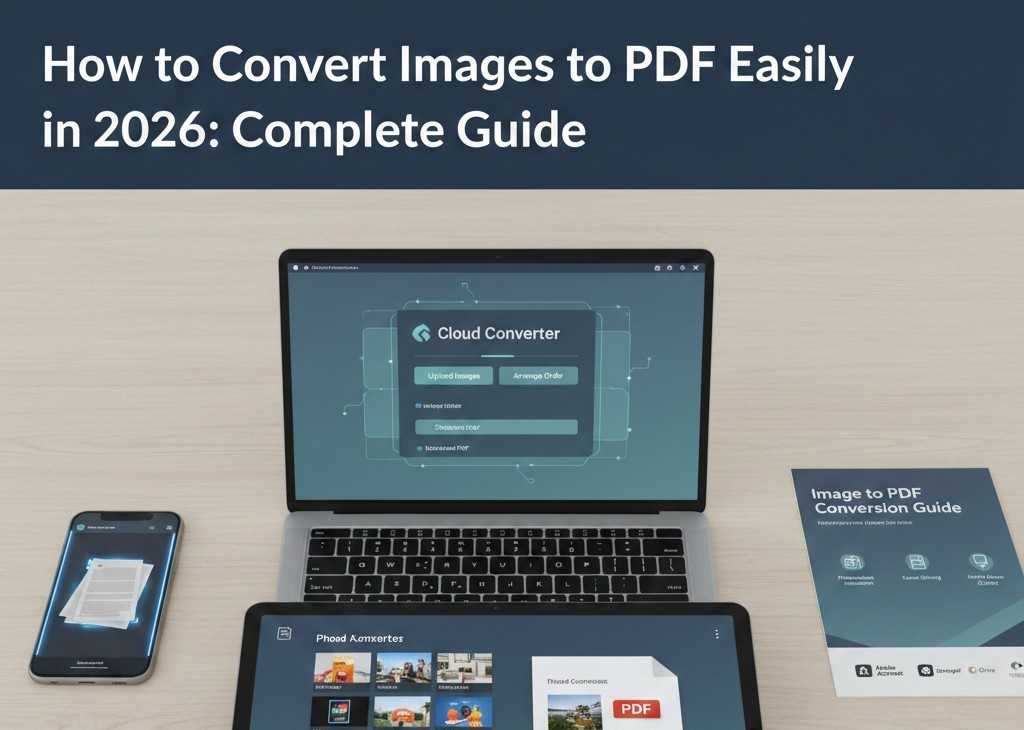
How to Convert Images to PDF Easily in 2026: Complete Guide
PDF is the most used file format in the business and education sectors. Texts, images, and other forms of data are usually preserved and shared through PDFs. Image to PDF conversion has become common because digital documentation shapes workflows.
Students, businesses, and creators store records safely through standardized portable document formats. People share files easily across devices since PDFs maintain layout and clear readability. Many users choose tools that convert image to PDF without quality loss.
However, converting images to PDF requires choosing the right tool for efficient conversion. The following is a detailed guide on how to convert photos to PDF using secure and high-end image to PDF converters.
How Image to PDF Conversion Works
Image to PDF tools start by reading image edges and orientation data. The software aligns images upright so text appears straight and readable. Users see consistent margins because alignment rules guide placement on pages. Clear alignment helps documents look professional across devices and screen sizes.
Page sizing controls how images fit within standard paper dimensions and formats. The tool offers options like A4 Letter or custom page sizes. Proper sizing prevents cropped edges and keeps content centered on pages. Balanced pages improve printing results and reading comfort on screens everywhere.
Resolution handling manages image clarity while controlling the final file size output. High resolution preserves details for zooming without creating heavy document files. Lower resolution suits sharing online, where speed and storage matter most. Smart tools balance resolution choices to match user needs effectively today.
Benefits of Converting Images to PDF
Converting images into PDF format offers clear advantages for daily digital document management needs. Users across education, business, and personal tasks prefer PDFs because organization becomes simpler. This format supports consistency, security, and convenience across many devices and platforms today.
1. Professional presentation
PDF documents present images in a structured and polished layout every time. Formatting remains consistent, which helps documents look reliable during reviews or official use. Professionals value PDFs because the visual order improves trust and readability. Well-presented files support better communication in academic and workplace environments.
2. Easier sharing
PDF files allow multiple images to exist within one easy document. Sharing becomes faster because recipients download and open a single file. Most devices support PDF viewing, which removes compatibility concerns. Simple sharing improves collaboration across teams, classrooms, and remote work settings.
3. Reduced clutter
PDF conversion reduces scattered image files across folders and storage spaces. Users manage fewer files, which simplifies naming, searching, and archiving tasks. Organized storage saves time and lowers frustration during document retrieval.
Best Image to PDF Converter Tools in 2026
Here are some of the best tools for converting images to PDF in 2026.
1. Adobe Acrobat
Adobe Acrobat remains a trusted choice for image to PDF conversion and document management. It handles JPEG, PNG, BMP, GIF, and TIFF image files easily and produces consistent PDFs with clear quality. Acrobat connects with Adobe Document Cloud, so users can sync files across devices seamlessly.
Pros
- High-quality output every time with stable formatting
- Full suite of PDF editing tools beyond simple conversion
- Works on most web browsers without installation
Cons
- Requires an Adobe account for repeated use
- Free online features limit the number of conversions
- Subscription is expensive for some users
2. Smallpdf
Smallpdf provides an easy online image converter that supports many file formats. Users upload JPG, PNG, TIFF, and other images and produce one PDF with chosen page settings quickly. Cloud access means conversion works across devices.
Pros
- Very simple interface, anyone can navigate
- Supports batch conversion of many images at once
- Works on any operating system in a browser
Cons
- Free usage daily is limited
- Some advanced tools require a Pro subscription
- Large files may take longer to upload
3. iLovePDF
iLovePDF delivers a clear online JPG to PDF tool with options to adjust margins, orientation, and page size before conversion. Upload images and merge them into a single PDF fast and safely
Pros
- Free basic use without signing up
- Fast conversion with adjustable settings
- Works with large image groups
Cons
- Free service has file size limits
- Some users report occasional ads
- An internet connection is required to use it
4. Google Drive
Google Drive does not have a direct, dedicated image to PDF button on desktop, but many people upload images into a Drive document or slide and save that as a PDF. On Android mobile users can scan documents and save them directly as PDF inside Drive.
Pros
- Works seamlessly with Google Workspace files
- No extra software needed for Drive users
- PDF saves directly into Drive for easy sharing
Cons
- Conversion steps are not obvious for new users
- Quality control is limited compared with specialist tools
- Drive may require manual steps to create PDFs
Here is a brief comparison between the above-mentioned image to PDF conversion tools.
| Tool | Ease of Use | Quality Output | Free Availability | Advanced Features |
|---|---|---|---|---|
| Adobe Acrobat | High | Excellent | Limited free use | Extensive tools |
| Smallpdf | Very easy | Very good | Limited free quota | Many PDF tools |
| iLovePDF | Easy | Good | Free with limits | Basic settings |
| Google Drive | Moderate | Basic | Included with Drive | Limited editing |
Step-by-Step Guide: Convert Images to PDF
Image to PDF conversion usually goes through the following steps on different platforms.
Step 1: Upload images
Select a trusted image to PDF tool from a browser or app. Upload clear images from your device storage or cloud folder.
Step 2: Arrange order
Preview uploaded images and place them in the correct reading sequence. Check orientation and spacing so pages appear neat and readable.
Step 3: Convert and download
Start the conversion process using the provided convert button. Download the finished PDF file and save it in a chosen location.
Conclusion: Turn Images into PDFs Instantly in 2026
Image to PDF conversion plays a key role in modern digital documentation workflows. Users benefit from better organization, consistent formatting, and reliable sharing across many devices. PDFs support professional presentation, which helps students, businesses, and creators communicate clearly. Simple conversion also reduces file clutter and saves time during document storage tasks.
Choosing the right tool improves quality, speed, and overall conversion experience significantly. Adobe Acrobat suits advanced needs while Smallpdf and iLovePDF offer quick online solutions. Google Drive works well inside existing workspace systems despite limited conversion controls.
These tools help users manage images efficiently and create dependable PDF documents in 2026.
FAQs
Can I convert JPG to PDF for free?
Many online tools allow free JPG to PDF conversion with basic limits today. Free versions usually restrict file size, usage frequency, or advanced editing features. Users can still create usable PDFs without payment for school work and personal needs.
Does image quality change after conversion?
Image quality usually stays stable when users select proper resolution settings during conversion. Most modern tools preserve clarity, color balance, and sharp text edges well today. Lower quality appears only if users intentionally reduce resolution for smaller files during export.
Can I combine multiple images into one PDF?
Many converters support combining several images into one organized PDF document quickly online. Users upload files, then arrange order before the final conversion step inside the tool. This feature helps create albums, reports, or scanned notes within single files for sharing.
What is the best image to PDF converter?
The best image to PDF converter depends on the needs, budget, and desired features today. Adobe Acrobat offers premium control, while Smallpdf and iLovePDF suit quick tasks online. Google Drive works well for workspace users who prefer simple integrated solutions for documents.